
Chagos Islands Explained: UK–Mauritius Deal and Diego Garcia
Chagos Islands: Explaining the UK–Mauritius Deal and Diego Garcia’s Strategic Role
The Chagos Islands have re-emerged at the center of international attention following a diplomatic agreement between the United Kingdom and Mauritius that reshapes sovereignty claims while preserving the strategic operation of a major U.S.–UK military base. The arrangement, discussed publicly by UK and U.S. officials in January 2026, has drawn scrutiny because it intersects with global security, post-colonial legal disputes, and U.S. foreign policy considerations.
Context and background
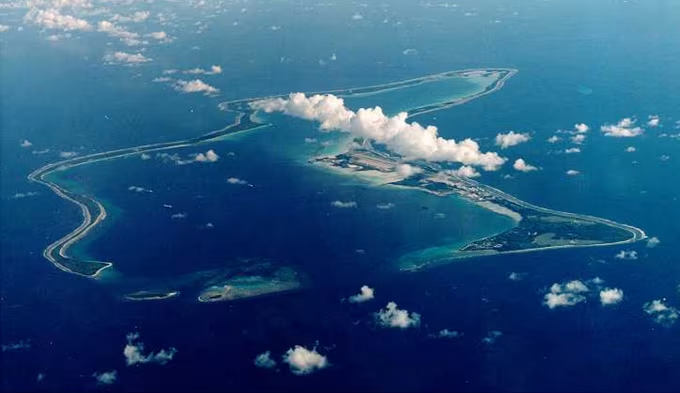
The Chagos Islands are an archipelago in the Indian Ocean that have long been administered by the United Kingdom, despite competing claims by Mauritius. According to CNN, the largest island, Diego Garcia, hosts a strategically significant military base jointly used by the United States and the United Kingdom. The base has played a role in multiple U.S. military operations in the Middle East and Asia.
CNN explains that Mauritius has argued the islands were unlawfully separated from its territory prior to independence, a claim that has been supported by international legal opinions referenced in past United Nations discussions. The UK, however, has historically maintained administrative control, citing security arrangements tied to Diego Garcia.
What happened
In January 2026, the UK and Mauritius announced a political agreement concerning the future governance of the Chagos Islands. As reported by CBS News, the deal would see the UK transfer sovereignty of the islands to Mauritius, while allowing the U.S.–UK military base on Diego Garcia to continue operating under a long-term lease arrangement.
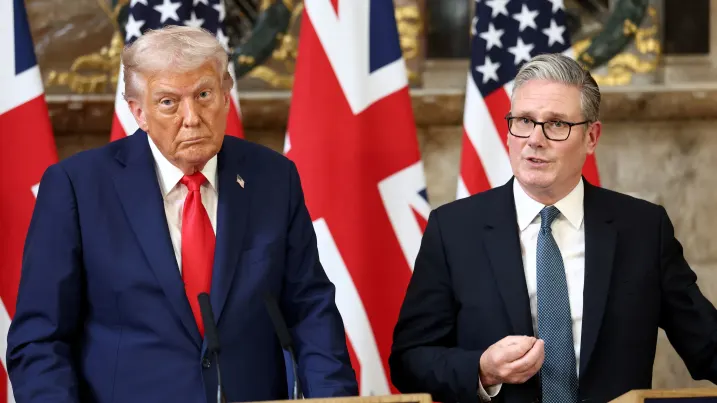
The issue entered wider global debate after former U.S. President Donald Trump raised questions about the deal in public comments, linking it to broader concerns about Western strategic assets overseas. CBS News noted that Trump compared the situation to other territorial and security disputes involving U.S. allies.
Institutional, legal, and political implications
The agreement has implications for how former colonial powers resolve sovereignty disputes while maintaining security partnerships. CNN reports that UK officials have emphasized the deal’s compatibility with international law, while also stressing that military operations on Diego Garcia would remain uninterrupted.
From a U.S. perspective, the base’s status is critical. CNBC reported that the issue surfaced during discussions at the World Economic Forum in Davos, where UK Prime Minister Keir Starmer addressed concerns about NATO cooperation and transatlantic security. Starmer indicated that the agreement was coordinated with U.S. partners to ensure strategic continuity in the Indian Ocean.
Media and official responses
Media coverage has focused on the balance between sovereignty and security. CNBC highlighted that U.S. officials have not signaled opposition to the deal, instead framing it as a bilateral matter between the UK and Mauritius with safeguards for American defense interests.
UK government statements cited by CNN underscore that the Chagos Islands agreement is intended to resolve a long-running dispute while maintaining stability. Mauritian officials, meanwhile, have described the deal as a restoration of territorial integrity, though details of implementation timelines remain limited in public reporting.
What comes next
What follows will depend on the formal legal steps taken by both governments. CBS News reported that parliamentary and congressional oversight processes may still scrutinize the arrangement, particularly regarding lease terms for Diego Garcia.
While uncertainties remain about how sovereignty transfer mechanisms will be executed, all three outlets emphasize that military operations on Diego Garcia are expected to continue. As CNN notes, the future of the Chagos Islands will likely be shaped by ongoing diplomatic coordination rather than abrupt change.
The Chagos Islands case illustrates how strategic geography, international law, and post-colonial negotiations intersect in contemporary geopolitics, with outcomes that resonate well beyond the Indian Ocean.